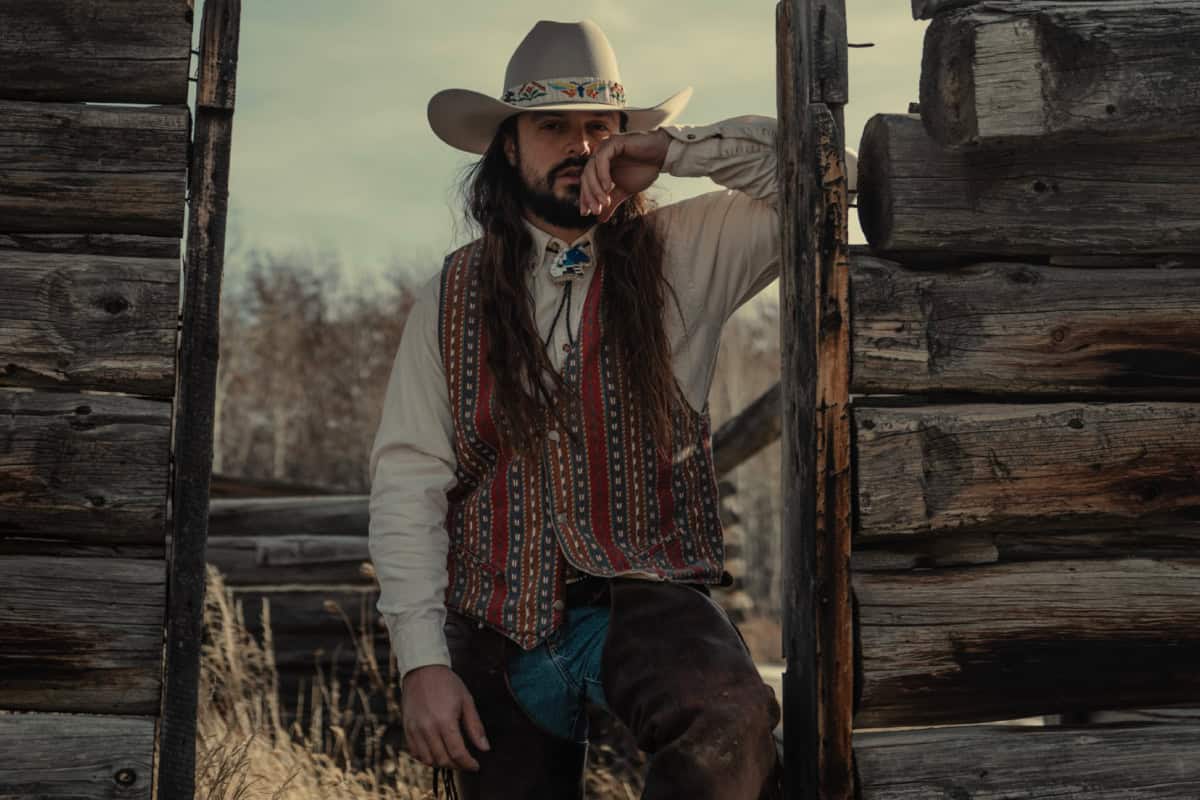
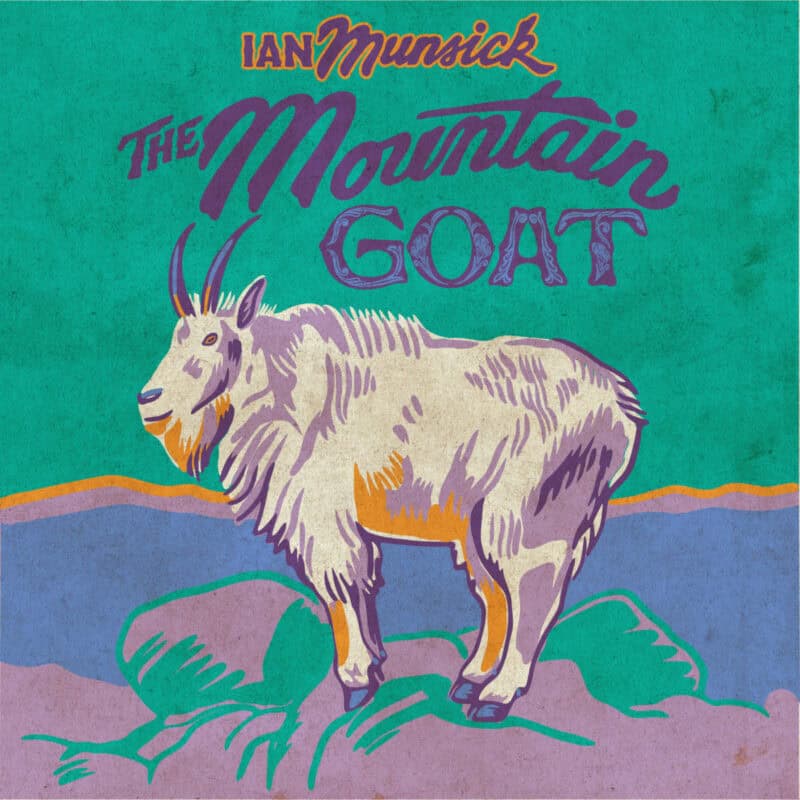
Ian Munsick recently released his fourth studio album, The Mountain Goat — a 15-track collection that continues to showcase the Wyoming native’s love for the American West, which has never simply been a place on a map, but a home, a culture and a way of life. With The Mountain Goat, Munsick takes his connection to the West even deeper, embracing a new level of creative freedom while proving that his roots aren’t something to be faked.
The Mountain Goat follows Munsick’s previous albums, Eagle Feather, White Buffalo and Coyote Cry, each drawing its name from an animal associated with the West. But this time, The Mountain Goat marks a new beginning for Munsick, serving as his first independent release and the beginning of a new partnership between his own WEST TO THE REST RECORDS, launched with his wife, Caroline Munsick, and Triple Tigers Records.
“About a year ago, my wife and I [decided] that we wanted to start our own label,” Munsick shared in an interview with Music Mayhem. “…I’m a pretty hands-on artist with my music. And I think that people that create their own music and their own art or their own product in general should be able to have the opportunity to own it too. So it was pretty special for my wife and I to start our own label.”
“Being able to own my music now and being able to partner with Triple Tigers… it’s just a match made in heaven. I’m very, very blessed to be able to work with them …,” he continued. “I’ve always known that where I’m from and growing up in the West, there’s not a lot of country music that is inspired by that part of the country. [But] when I think of the word country, that’s exactly where my mind goes to, is the West because the people that live out there, they are country people through and through.”
He adds, “I think about the word landscape when I think about country and earth, and there’s no place that is more inspiring than the landscape of the West. So for me, it’s always been, ‘how do I bring that culture into the mainstream of country music? So that it’s not just about places like Texas and Georgia and Tennessee.’ I want to make sure that people know that the West is just as country, if not more country, than all of these other places.”
That same creative vision extends to the way Munsick approaches his music, with each project serving as a cohesive reflection of the West. Munsick was involved in virtually every corner of his project, co-writing and co-producing the entire album alongside Mike Robinson and Jeremy Spillman. He also played nine instruments throughout the collection, including acoustic and electric guitar, mandolin, bass, banjo, harmonica, bouzouki and piano.

Meanwhile, a seasoned group of Nashville session musicians helped bring his recordings to life, with Ross Holmes’ fiddle playing an essential role on multiple tracks, Justin Schipper adding cinematic pedal steel and drummer Aaron Sterling providing forward momentum. For Munsick, that hands-on approach is an important part of establishing his identity as an artist.
“I always want people to know that it’s my music before my voice even starts,” Munsick explained. “Country music, over the last few years, a lot of it has been created by the same people… I’ve always wanted to stand out. And a big part of that is me playing instruments on my own records, because there’s a thing that I have, and it’s not the most technical thing. It’s not the best playing, but it’s a thing. And I think that true artistry, people can hear the person who’s playing the instrument through the instrument. So that’s always been an important piece for me.”
Munsick, who knows the Wyoming landscape intimately, sang in a family string band before stepping out as a solo artist in 2017. He eventually earned the tongue-in-cheek “Mountain G.O.A.T.” title through hard work and songs that authentically reflect the rugged realities and traditions of his upbringing. It was fitting, then, that the name The Mountain Goat began as something of a joke.
“I just kind of had it as a play on words, like G-O-A-T, The Greatest of All Time. And that’s what the kids are calling it now, the GOAT. So having a lot of my albums, well, all of my albums have been inspired by animals,” Munsick said. “And so I knew that for the fourth album, we could go that way or we could go another way. But I wrote that, and it was kind of a joke where I was like, ‘I don’t know if I’m going to cut this or not, just because it feels kind of arrogant.’”
Munsick continued, “But my co-writer, Jeremy Spillman, was like, ‘Man, that’s a really cool title. And it’s kind of true because you’re the only one that’s from there.’ So for me, that kind of took the arrogance out of it because there’s not a lot of other country artists from the Rocky Mountains. So being able to choose an animal that really, I think, has a lot of correlation to me as an artist was pretty spot on for this album. For sure.”
That Rocky Mountain identity is woven throughout The Mountain Goat, which combines Munsick’s rugged Western sound with modern pop elements. The singer/songwriter opens the release with the banjo- and fiddle-laden title track before transitioning to the high-energy “Geronimo,” which served as the project’s first release. The song showed listeners that Munsick was entering a new chapter with both feet on the ground and a willingness to take a creative leap.
“Geronimo, just the word. I feel like when people hear that word, the first thing that they think of is jumping in,” Munsick said of the song that includes the lyric: “I ain’t afraid to fall no more.” “For me, this is a huge new chapter for my life, being an independent artist and starting my own label and partnering with another independent. We wanted to make the first [song] a splash. And for people to know that I’m not going anywhere, I’m going in even harder to the Ian that I used to be and making sure that it’s undeniable.”
Meanwhile, “Love Is Blind,” a fiddle-driven heartbreak anthem written with Ryan Tyndell and Spillman, tackles betrayal with a clever Western twist, including the lyric, “Now I’m right in the middle of a bow and a fiddle, tell me how long have I been gettin’ played.” The track became one of the most-added singles at country radio upon its release, and as the song began making an impact, Munsick credited his team.
“Man, with the radio thing, I really feel like you are as good as your team is. Triple Tigers is such a great team. Their track record is insane. So being able to finally choose the right tune that is still very much me, but also can blend with the radio world, I feel like it was a long time coming, but I think that we finally have that one with ‘Love is Blind.’”

Elsewhere, “Palomino Eyes” draws inspiration from Munsick’s wife while blending the imagery of the West with the artist’s own family life.
“There’s just always new inspiration from the culture of the West that I love to intertwine with my wife and my kids. So ‘Palomino Eyes,’ obviously a Palomino is a horse, but my wife is also, she has blonde hair. So it’s a love story in the West,” Munsick shares of the track, which features a driving beat and lyrics crediting one’s better half for being the one to keep you settled and grounded. “Being able to cross-breed those worlds has just always attracted me as a creator because I don’t feel like anybody has done that.”
Munsick does a similar “cross-breeding” with “Blue Roan,” one of the album’s most emotionally charged tracks, which showcases his love for his daughter, Roan Autumn Munsick, whom he and Caroline welcomed in 2025. She joins the couple’s older son, Crawford James Munsick, who was born in 2020.
Written with Spillman and Ryan Beaver, “Blue Roan” begins with tender, Spanish-style guitar and Munsick’s whispering vocals before building into a more ferocious warning to anyone who might someday hurt his little girl.
“A blue roan is another color of a horse,” Munsick shares. “And we named our daughter Roan just because it’s a very pretty name. But blue roans are my favorite color of horse. And I had that title and I kind of knew exactly how I was going to spin it with, ‘If you make my roan blue, I’m going to kill you more or less.’ You know what I mean? The classic father being very protective of his daughter country song.”

Before the song came together, however, Munsick had to do a little convincing.
“When I brought it to my co-writers who I’ve written some great tunes with in the past, they were like, ‘What the hell are you talking about? How are we going to spin this?’ But as I started to kind of be like, ‘No guys, just roll with me, have some patience. Here’s how we’re going to do this.’ And then they’re like, ‘Oh, this is really, really cool,’” Munsick said. “It turned out to be a very eclectic track that has a ton of strings on it. At one point, it’s very hard rock. And at other points it’s very classical jazz. There’s a lot of different textures in that. But again, my favorite thing is to bring fresh ears to country music.”
That protective instinct also drives “World War III,” written by Munsick, Robinson and Spillman. Although the title carries a much larger cultural meaning, Munsick approaches the song through the deeply personal perspective of protecting the people and place he calls home.
“Man, it was very important. ‘World War III’ obviously has been a hot topic in our culture for a long time. So it’s always a little bit scary because it’s like, ‘Well, are people going to think that I’m being political?’ But at the end of the day, anybody who is the head of the household, they know that they would die for their people, for their wife, for their husband, for their kids, for their land, for what the American dream is all about. And so ‘World War III’ was a no-brainer,” he said. “And we started playing that live and people really started to respond. So I was like, ‘Well, I think that other people can relate too.’”
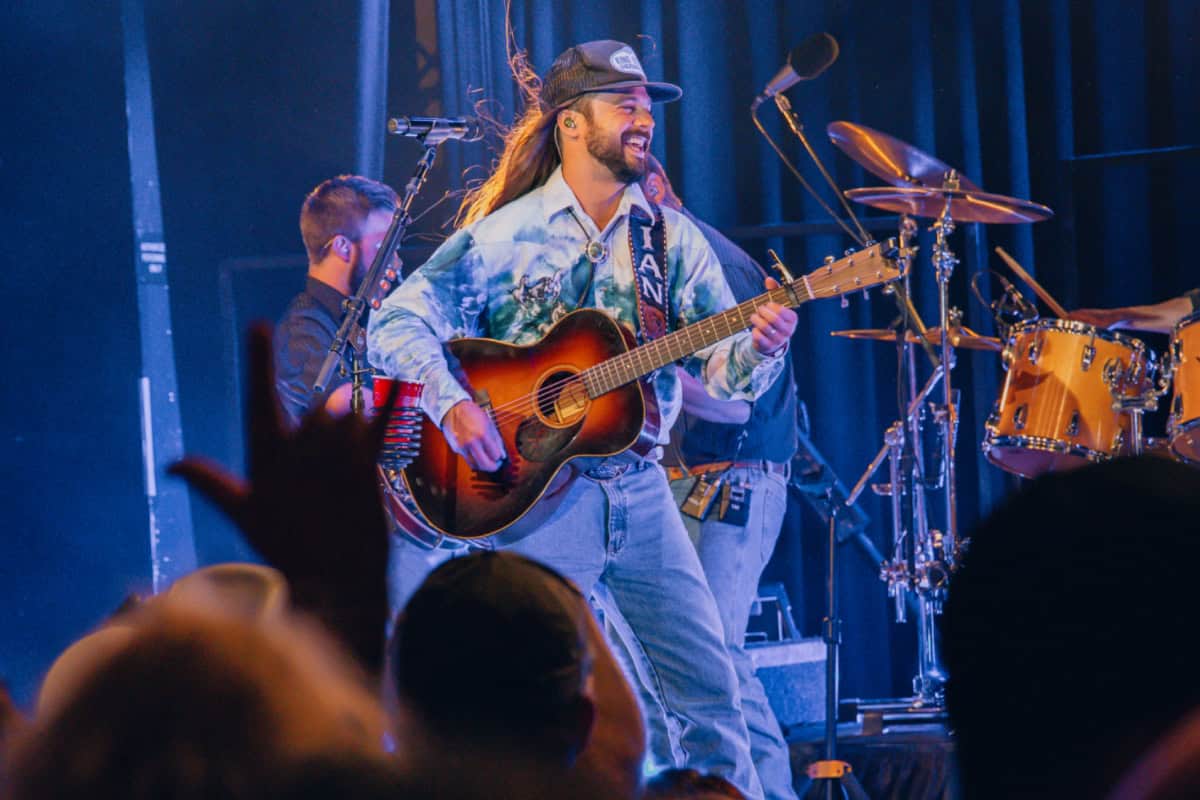
Munsick’s previous projects, Coyote Cry, White Buffalo and Eagle Feather, have collectively accumulated more than one billion streams. Meanwhile, Spotify, CMT and the Grand Ole Opry have all recognized his music, while his growing live audience has continued to connect with the Western perspective at the heart of his work. In 2025, Munsick made history as the first Wyoming-born artist to headline Cheyenne Frontier Days, the iconic rodeo known around the world as the “Daddy of ‘Em All.”
Now, The Mountain Goat carries that mission forward.
The album’s animal-themed title is more than a continuation of a creative tradition. The animals, for Munsick, represent something more — a connection to the land and a reminder that his music is meant to stand the test of time.
“Man, really, all of them have been animals that kind of embolize the West. There’s the coyote, the eagle, the buffalo, and then there’s the mountain, the goat,” Munsick says. “And for me, it’s a reminder for my music to be timeless because animals are timeless. They’re not going anywhere hopefully. And they’ve been here for a long, long, long, long, long time. And there’s other things that are created by humans that may or may not be here in a few years, but what God makes will be here forever.”
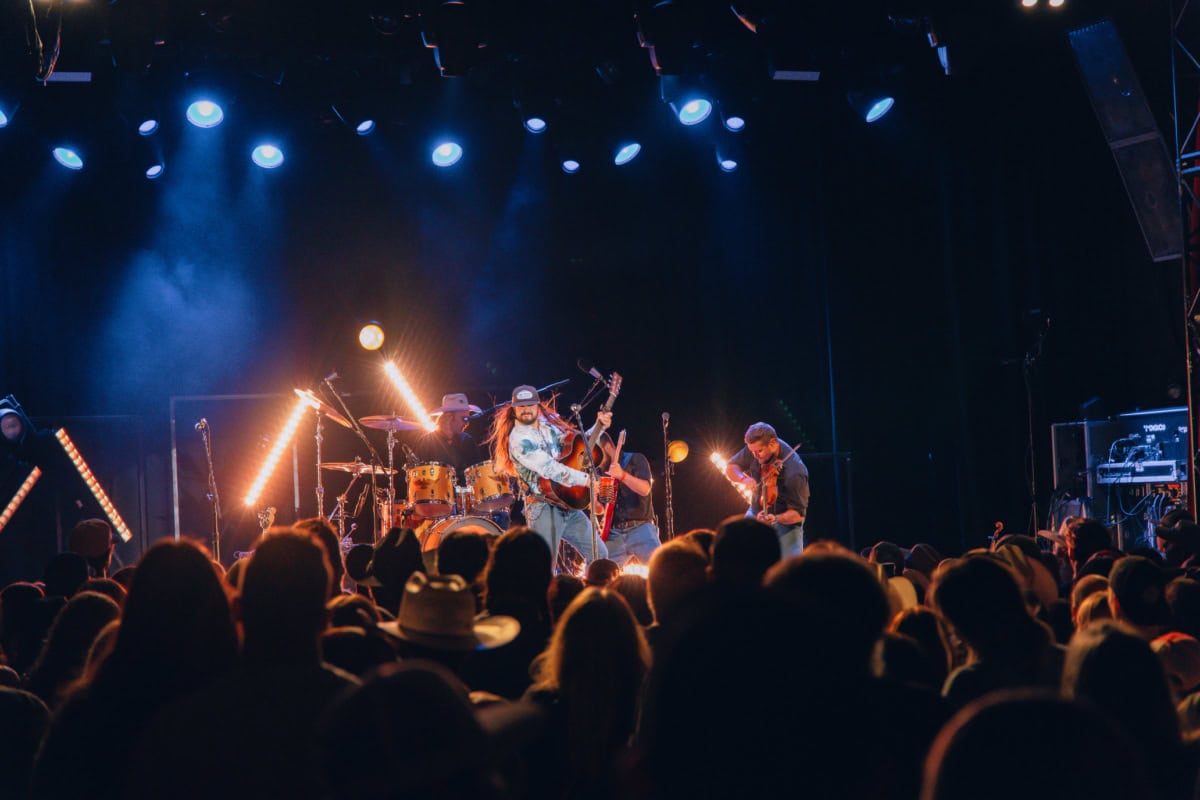
For more on Ian Munsick and his new album, The Mountain Goat, visit his official website.